



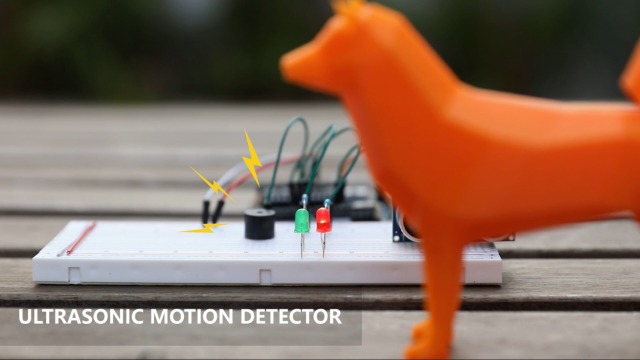


📡 Elevate your smart projects with precision sensing that never sleeps!
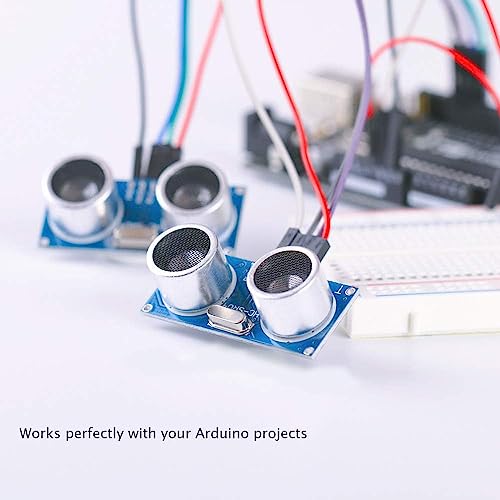
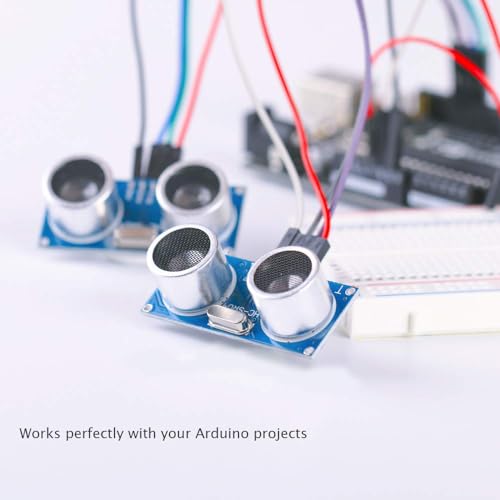
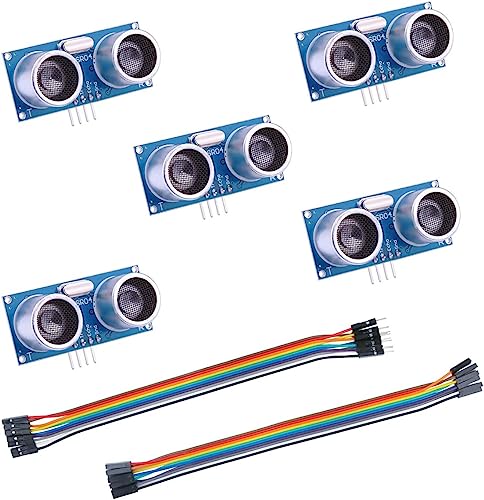
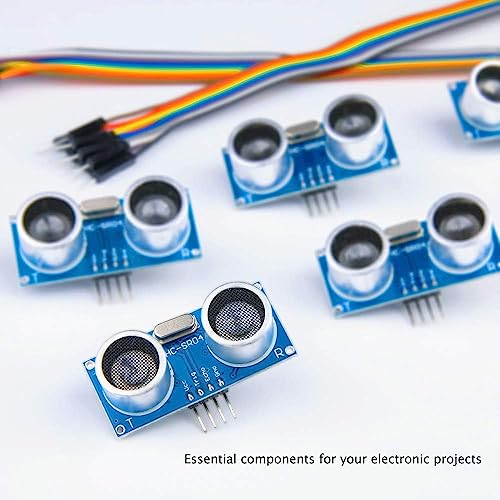
The ELEGOO 5PCS HC-SR04 Ultrasonic Distance Sensor pack offers high-precision, low-power ultrasonic ranging from 3cm to 450cm with 0.3cm resolution. Compatible with major Arduino boards and wireless modules, these sensors excel in both indoor and rugged outdoor environments, making them ideal for advanced DIY IoT, robotics, and industrial applications.





| ASIN | B01COSN7O6 |
| Best Sellers Rank | #21,339 in Industrial & Scientific ( See Top 100 in Industrial & Scientific ) #2 in Ultrasonic Proximity Sensors |
| Date First Available | March 8, 2016 |
| Is Discontinued By Manufacturer | No |
| Item Weight | 0.32 ounces |
| Item model number | EL-SM-001 |
| Manufacturer | ELEGOO |
| Product Dimensions | 0.59 x 1.77 x 1.18 inches |
| Resolution | 480 x 800 pixel |
| Standing screen display size | 3 |
F**.
Measures distance to water accurately. I'm using it to caclulate bridge clearance. Works OUTSIDE! (in a plastic box)
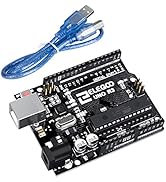
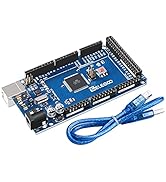
Complete project description follows but the keys for the Ultrasonic Distance Sensor: 1) it's been running in a plastic box, outside, for almost a month with no problem. The Arduino wakes us every 15 minutes and takes a measurement, transmits it, then goes back to sleep. 2) it is measuring the distance TO WATER! I even turned the swim jets in my pool on to test turbulence and it works fine. Green Pond Bridge Boat Clearance At ‘very low tide’ the clearance under Green Pond Bridge in Cape Cod is 6’6” or less and that is too low for the boat I use. The tide charts for Falmouth, MA are theoretical and can vary as much as 18” from what is actually happening at the bridge. This system monitors the clearance and transmits the information on the internet. All of these parts were purchased from Amazon. Transmitter An (Arduino) Elegoo UNO R3 board is connected to an Elegoo HC-SR04 Ultrasonic Distance Sensor. The UNO and the sensor calculate the distance from a fixed dock to the sea level, then transmit that data using a MakerFocus NRF24L01 Wireless Transceiver to the Receiver described below. The Transmitter sits on the end of a dock where there is no power, so the UNO, Transceiver and Distance Sensor are powered by the energyShield 2. This battery has special capabilities – it wakes everything up every 15 minutes. The system takes a couple readings of the distance to the water then transmits that data, then the battery shuts it all off. The data transmitted includes information from the battery – time, date, and voltage. I have been testing this unit at home (in Dallas) and it has been operating outside, for about 20 days. Based on battery drain it looks like it will operate for about 4-5 months before it needs a recharge. When the temperature drops below zero the system still works fine but the voltage reported in the battery seems low. All of this is housed in a plastic box printed for the purpose with a FlashForge 3d Printer Creator Pro, using eSun White ABS+ filament Picture below. Receiver An (Arduino) Elegoo MEGA 2560 R3 is connected to another NRF24 Transceiver to receive the data. The MEGA does the math to convert the distance from the dock to the water, to the bridge clearance. Then the information is displayed on an Elegoo UNO R3 Touch Screen (that also works fine on the Mega). Picture below. A small plastic frame for the Receiver was also printed on the 3d printer Web Server Finally, the information in the MEGA is transmitted over a serial bus to a Hiletgo ESP8266 NodeMCU ESP-12E Internet WIFI Development Board (Also operates using Arduino IDE programming). This board is connected to the MEGA via the XCSOURCE Logic Level Converter and powered by a UCEC MB102 Breadboard Power Supply Module. All mounted on an Elegoo Breadboard. The ESP8266 is programmed to be a web server. It connects to the internet through the modem/router provided by AT&T. Picture of my cell phone below.
D**I
Works great
Great selection for the project i am working on.
T**Y
Good value for many sensors
A nice plus are the Dupont wires provided. However the 5 sensors have a total of 20 connections. Yes there are 20 wires provided but 10 are female-male and 10 are female-female. It would be nicer if there were 20 of each since you want female-male to connect to breadboards. FYI, if you use them with the one wire (bidirectional) configuration and add a 74HC4051 mux/demux you can drive 8 of these with only four pins on the Arduino.
J**D
Good quality and easy to use with plenty of example code available
These are nice devices to work with and are easy to use to implement for distance measurements. I used these for a particular project to determine a garage door position (open,closed, or in-between) I have been using these devices for more than a year without any problems with accuracy.
S**Y
I like the price and the fact that they included some ...
I like the price and the fact that they included some cabling. That is handy. I'd say the sensors from this vendor are about as good as any you'd find - average quality, but definitely not as bad as some!! I am starting to like Elegoo, as it seems they do a decent job of lowering prices, but keeping quality high enough to still be usable. So, from what I'm seeing, I think Elegoo is doing it right.
A**H
Working as described
I was a little leery of these after buying several off-brand SR-04 sensors from another vendor a few years ago. I had constant trouble setting those sensors up, a google search revealed that there were known issues with the firmware in knockoff SR-04 sensors from that time period. Anyway, I received my Elegoo sensors yesterday, took one out of the bag and hooked it to a Raspberry Pi 3. It's working exactly as it should and I was able to get it running easily. Caveats on setting these up: 1) I think they use a significant amount of current, you may want to power the SR-04 separately from the Raspberry Pi power pins 2) the echo pin of the SR-04 produces a 5V pulse, so you'll need to set up a simple voltage divider to provide a 3V input to the Raspberry Pi. 3) One more reason to use Python 3 - time.perf_counter() will improve the precision of your pulse measurements! I think you'll be happy with these, have fun!
M**T
Works Great!
My experience with these components is limited, but these worked awesome and were a deal. I've purchased a number of components components from this manufacturer and can't recommend them enough. I've been very satisfied with each item, the speed I received it, the quality and function. I plan on purchasing more of Elegoo's products in the future.
F**R
Inexpensive Distance Measurement
Great price and excellent functionality. I took one of these and added an ATTiny 85 and a little LASER module, mixed in some programming, and built a garage parking assist that mounts to the garage door opener. When it senses the top of the car, it turns on the LASER which shines on the wall in front of the car, letting you know that you're in the garage far enough.
K**N
These little modules work great and are sold in a group of 5 for a great price. All 5 come bundled in a single anit-static bag, and were well packaged. Also, did you see that last line where Elego mentions they include "a little gift"? I missed that, and it was a pleasant surprise. No spoilers, but that little gift was a great help in connecting up those sensors. The range is listed to 500 cm but I started to get large margin of errors past 400 cm. I also couldn't read closer than 4 cm (not 2 cm). To get a more accurate reading within the 4 cm to 400 cm range, I found taking a moving average of the last 3 readings to be good enough to do the trick. If you're not picky, one reading is sufficient. The PCB is well designed - it is the minimum size to hold the sonic sensors, rugged and firm. There are 4 pins; two for 5v and GND, 1 to TRIGGER it, and one to read the ECHO from. Usage is actually quite simple: 1. Send a pulse to the TRIGGER pin to start the ranging; 2. Measure the time in microseconds that it takes the ECHO pin to respond; 3. Divide the time taken by a constant (manufacturer provided; it is 58.0 for CM) to get the distance. I'm not sure how much Amazon will allow me to write in a review, but I'm including the minimalist sketch (no comments) below to get you started (for Arduino, sorry, I'm not familiar with Pi). This will loop the ranging while reporting the distance in CM to the SERIAL MONITOR window in the Arduino IDE every second: --- Example Minimalist Sketch for HC-SR04 in Arduino -- /* HC-SR04 Sonic Ranging Sensor 5v to VCC 7 to Trig 8 to Echo GND to GND */ void setup() { pinMode(7, OUTPUT); digitalWrite(7, LOW); Serial.begin(9600); } void loop() { unsigned long start; digitalWrite (7, HIGH); delayMicroseconds(10); digitalWrite (7, LOW); // Wait - for ECHO pulse while (digitalRead(8) == 0); start = micros(); while (digitalRead(8) == 1); Serial.println ((micros() - start) / 58.0); delay(1000); } --- End ---
C**N
Funziona perfettamente. Utilizzato per riempire una vasca fino a livello x.
G**2
Ottimi sensori poi arrivano pure con cavi maschio femmina e femmina femmina inclusi
B**L
I don't have a lot of experience with these range sensors so I can't compare them to other brands. What I found is that even when facing a solid, non-moving object, the numbers that they produce jump all over the place creating false readings. If ALL BRANDS do this, then I guess they are the same. I don't know. But, it was easy enough to just code an averaging routine. Actually, even with averaging, the numbers still would go way out of what it should be. So you'd have to keep that in mind when coding and perhaps do several calls before accepting the number. I don't think I'd use this for robots as there are too many false readings. In my project, I use one of these as a water level meter sensor. This triggers a bar meter on a Nextion display. In order to avoid the meter bouncing all over the place, besides the averaging routine, I only call it every 30 seconds or so and when I make the call, knowing that the water level would not have changed much at all, I compare the new number with the old one. If it's within 5mm then I'll send the number to the bar graph. But if it's way out, too high or too low, then I KNOW that the number is not accurate and I just drop that number and wait for the next. This "stabilizes" the numbers for this use.
O**6
Ho acquistato questo prodotto per provare i sensori ultrasuoni e ne sono rimasta molto soddisfatta l'ho utilizzato per robot e sensore di parcheggio e l'ho testato con varie misurazioni che sono risultate perfette, per far si che funzioni perfettamente servono delle superfici lisce per far rimbalzare il ma altrimenti funziona benissimo lo stesso ha un raggio compreso tra 3 cm e 4 metri che e comunque molto buono per sensori del genere. Nella scatola sono inclusi anche i cavi che bastano per progetti in cui i sensori sono lontani dalla scheda. Lo consiglio.
Trustpilot
1 month ago
2 months ago


